
You found out. And now everything feels like it happened underwater.
You replay moments. You question your memory. At times, you reach out to your partner, only to withdraw, as an instinctive response from your body suggests that it is not yet the appropriate moment. If that's where you are right now, you are not broken. You are in betrayal trauma, and it is real.
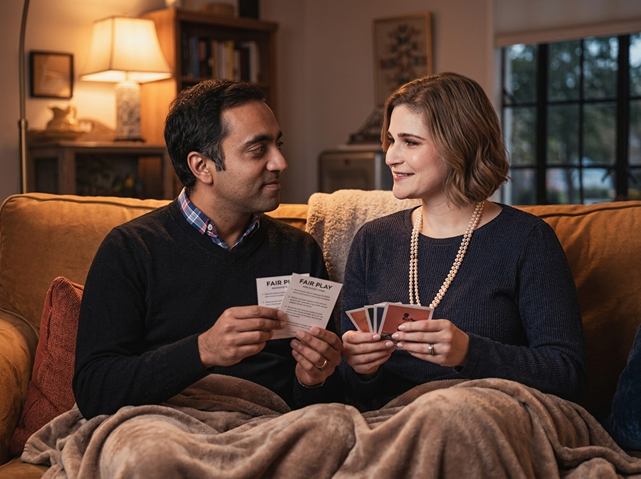
Here is the thing that most couples don't know: you don't have to wait until you're "ready" to start rebuilding. You can take tiny, intentional steps tonight in your living room, without a therapist in the room, as long as those steps are structured with safety in mind.
That's exactly what trauma-informed Gottman exercises for couples are designed to do.
Why Regular Gottman Exercises Don't Always Work After Betrayal
The Gottman Method is backed by over 40 years of research and has been tested with more than 3,000 couples. It works. But here's what many online resources skip over: when there's active trauma in the room, you can't just run the standard exercises and expect the same results.
When one or both partners have trauma in their story, including betrayal wounds or PTSD, the nervous system often takes over more than the brain and heart. Fight, flight, freeze, and fawn responses can shut down authentic connection fast.
So if you've ever tried a "share your feelings" exercise and it blew up into a three-hour spiral, this is probably why. It's not that you're bad at communication. It's that your nervous system wasn't set up to prioritize safety.
Research shows that couples practicing Gottman Method techniques like stress-reducing conversations and softened start-ups experience significant improvements in empathy and relational satisfaction after infidelity. But those techniques need to be adapted when trauma is present. That adaptation is what makes the difference.
What "Trauma-Informed" Actually Means for These Exercises
Before you get to the exercises, let's be clear about what trauma-informed means here. It means:
- Consent before contact. No touching without asking first, even something as simple as a hug.
- Opt-out is always on the table. Either partner can pause or stop any exercise without it being a failure.
- No flooding. If your heart is racing, your hands are shaking, or you feel like you want to leave the room, the exercise stops. You co-regulate first.
- Placing a premium on productivity. These exercises are not about checking a box. They are about safety. Slow is fast here.
Trauma-informed Gottman work prioritizes safety first, always, and that includes physical, emotional, financial, and sexual safety. Partners learn how to track their triggers and their partner's without shame, guilt, blame, or coercion.
Keep that as your north star as you go through the seven exercises below.
7 Trauma-Informed Gottman Exercises for Couples You Can Try Tonight
Exercise 1: The Two-Minute Check-In (Not a Feelings Dump)
What it's for: Building the habit of emotional presence without overwhelm.
Safety note: This is not a space to process the betrayal. It is only a present-moment check-in. If bigger things come up, write them down and save them for a guided session.
Script:
Partner A: "On a scale of 1 to 10, how is your body feeling right now? Mine is a [number] because [one simple reason]." Partner B: "Thank you for telling me. My body is at a [number] because [one simple reason]." Both: "Is there anything you need from me in the next hour? Just for the next hour?"
Do this once a day, ideally at the same time. That's it. No advice, no problem-solving, no deep processing. Just a check-in.
Exercise 2: The Stress-Reducing Conversation (With a Hard Boundary on Blame)
What it's for: Reconnecting as teammates who also have individual stressors outside the relationship.
Safety note: This exercise specifically addresses stress that is NOT related to your relationship or the betrayal. Pick a topic like work, family, or something in the news. This boundary is non-negotiable for trauma survivors.
Gottman describes the attunement stage as reversing patterns of conflict avoidance and self-disclosure avoidance that can build walls between partners. Here, partners learn to respond to one another's emotional bids with openness rather than defensiveness.
Script:
Partner A: "I want to tell you about something stressful that has nothing to do with us. Is now an okay time?" Partner B: "Yes, I'm here." (Or, "Can we do this in ten minutes?") Partner A shares for three minutes. Partner B listens without fixing, advising, or relating it to themselves. Partner B responds: "That sounds really hard. What do you need most from me right now, support, advice, or just to be heard?"
Switch and repeat.
Exercise 3: The Softened Start-Up Practice
What it's for: Learning to bring up a challenging feeling without it becoming an attack.
One of the most significant predictors of relationship breakdown, according to Gottman's research, is what he calls a harsh start-up. That means starting a conversation with criticism, blame, or contempt. For betrayal survivors, such behavior is almost unavoidable at first because the pain is enormous. But you can practice a gentler entry.
Safety note: Only attempt this exercise on a "medium" feeling, not the biggest ones. Practice with something rated three out of ten, not ten out of ten.
Script template:
"I feel [emotion] when [specific situation]. What I need is [specific request]." Example: "I feel scared when you come home late and don't text. What I need is a quick message, so I know where you are."
This exercise is not about minimizing the big stuff. It is about building the muscle so that when the big stuff comes, you have a way in.
Exercise 4: The Appreciation Ritual (Even When It Feels Forced)
What it's for: Rebuilding the positive emotional bank account.
Key measurable elements of fulfilling and stable long-term relationships include trust, attunement, and a capacity for gratitude and cherishing. After betrayal, appreciation can feel fake or even painful. That's okay. Do it anyway; research shows it rewires how you see each other over time.
Safety note: Do not force gratitude for anything related to the betrayal or for "trying." Keep it small and genuine.
Script:
"One thing I genuinely appreciated about you today was [specific thing]. It made me feel [emotion]."
If you can't think of anything, start with something basic. "You made coffee." "You let me have quiet this morning." Small and real always beats big and hollow.
Do this once a day. It takes under two minutes.
Exercise 5: The Physiological Self-Soothing Break
What it's for: Stopping flooding before it derails a conversation.
This technique is actually a Gottman repair strategy, and it is critical for trauma survivors. When partners get stuck in cycles of reactivity, pursuit, withdrawal, or shutdown, they often do not fail at communication. They are surviving.
Flooding, that state where your heart rate goes above 100 beats per minute and your prefrontal cortex essentially goes offline, makes meaningful conversation impossible.
How to do it:
- Agree on a safe word or phrase that means "I need to pause."
- When either partner uses it, take a twenty-minute break. Not a ten-minute break. Research shows it takes at least twenty minutes for the nervous system to return to baseline.
- During the break: walk, do slow breathing, pet an animal, and listen to neutral music. Do NOT consider the argument or rehearse what you'll say next.
- Come back and check in: "Are you ready to continue, or do we need to reschedule this conversation?"
Script for calling the break:
"I'm at my limit right now. I want to keep talking about this, but I need twenty minutes. Can we come back to this at [specific time]?"
Exercise 6: The Narrative Repair Conversation (Structured)
What it's for: Allowing the hurt partner to share their experience of the betrayal in a contained, structured way, without it becoming an interrogation or a spiral.
This one is more advanced. Only try it if the first five feel relatively stable.
Safety note: Set a timer. The hurt partner speaks for five minutes, uninterrupted. The other partner's only job is to listen and reflect. There are no questions allowed during the five minutes. After the timer, the listening partner reflects on what they heard using the script below.
Script:
Hurt partner: "[Partner's name], when I found out, what I experienced was [describe the moment]. "What it did to my sense of safety was [describe impact]. What I want you to understand most is [one thing]." Listening partner: "What I heard you say is [reflect in own words]. What I think you need me to understand is [reflect]. Is that right?"
If the listening partner feels defensive or flooded, they use the safe word and take a break before responding.
Gottman's approach to treating betrayal allows the hurt partner to express anger, insecurity, resentment, fear, and feelings of rejection, rather than down-regulating their expression of emotion. This exercise honors that while keeping both partners regulated.
Exercise 7: The Dream Within the Conflict Conversation
What it's for: Understanding what each partner is really asking for underneath the surface argument.
This is one of the more profound trauma-informed Gottman exercises for couples because they shift the conversation from positions ("I need you to do X") to the deeper need underneath ("What I'm terrified of is Y").
Research on betrayal trauma reveals that a significant majority of betrayed partners remain in relationships with their betrayers and believe restoration is possible. This exercise taps into that hope and gives it a structure.
Safety note: Do this when both partners are at a calm baseline, not in the middle of a conflict.
Script:
"Underneath this disagreement, I think what I'm really holding onto is [fear, hope, or value]. For me, this situation connects to something deeper, which is [explain]. What I'm hoping for in our relationship, even now, is [state the positive vision]."
Then switch.
The goal is not to solve the conflict in this conversation. The goal is to understand what each person is protecting.
A Note on Safety: When to Pause and Seek Professional Support
These exercises are a starting point. They are not a substitute for professional help.
Research shows that 87% of betrayed partners experience self-blame, and 43% consider harming themselves after betrayal. If you or your partner are experiencing thoughts of self-harm, intense dissociation, or complete emotional shutdown, please reach out to a trauma-specialized therapist before continuing with these exercises on your own.
Additionally, if your relationship involves ongoing deception, active addiction, or physical safety concerns, individual trauma work should come before couples work.
Relevant Market Trends: Why This Approach Is Growing
More couples are seeking trauma-aware relational tools right now, and for good reason. Awareness around betrayal trauma has expanded significantly in clinical communities. A 2024 randomized control trial published in a peer-reviewed journal examined the effectiveness of Gottman Method Couples Therapy for couples presenting after infidelity, showing it outperformed treatment-as-usual approaches for this specific population.
At the same time, couples are looking for accessible tools they can use between sessions, especially as waitlists for therapists grow longer. Exercises with scripts and structure fill that gap without replacing professional care.
FAQs About Trauma-Informed Gottman Exercises for Couples
Q1: Can we do these Gottman exercises on our own without a therapist?
This post offers seven exercises that help couples start building safety at home. That said, a trained Gottman therapist best supports the more complex conversations, especially around the betrayal narrative. Think of these as tools for between sessions, not replacements for clinical support.
Q2: What if my partner refuses to do any exercises with me?
Start with your own individual healing. A partner who isn't ready for couples work is often someone whose nervous system is shut down or defended. Individual trauma therapy, especially EMDR, can help both of you get to a place where couples' work becomes possible.
Q3: How long does it take to heal from betrayal trauma using these methods?
There's no honest answer to that because every couple is different and every betrayal is different. What research consistently shows is that couples who stay engaged in structured, evidence-based work have meaningfully better outcomes than those who try to "just get over it." Progress often comes in small waves, not one big breakthrough.
Q4: Are these exercises safe if I have PTSD from the betrayal?
The exercises in this post are designed to be gentler than standard couples work, with explicit safety notes and scripts built in. But if you have been diagnosed with PTSD or experience significant flashbacks, dissociation, or panic, please work with a trauma therapist individually before starting couples exercises. Safety always comes first.
Conclusion: You Don't Have to Wait to Start Healing
The hardest part about betrayal trauma is that it robs you of the feeling that anything is safe, including trying. But these seven trauma-informed Gottman exercises for couples give you a way to take one small step tonight, with your body's nervous system in mind, with real scripts so you're not guessing what to say, and with safety notes so you know when to stop.
You deserve a path back to each other that doesn't retraumatize you along the way.
If you're ready to go deeper with a therapist who understands both the Gottman Method and trauma-informed care, Dr. Cammy works with couples navigating betrayal trauma every day. Her approach combines the evidence base of the Gottman Method with deep trauma expertise, so you get the structure you need and the safety your nervous system requires.
Schedule a consultation with Dr. Cammy today and take the first step toward reconnection that actually holds.
Blog Posts You'll Also Want to Read
- Do You Need Trauma Therapy or Couples Counseling? Here's How to Know
- The Hidden Cost of Ignoring Trauma in Relationships
- From Surviving to Thriving: Couples Who Healed Together After Trauma